
Tracing Former Owners of a Yates County Property
Compare everything by parcel, date, and custodian before you trust a Yates County ownership result. The County Clerk records the deeds. Town assessors keep the taxable inventory. Real Property handles rolls and mapping. The Treasurer manages county collection and delinquency. Each office answers a different question about the same tract. Online records can lag behind a transfer, a split, or an annual roll update. So write down the source date. Add the exact tax-map punctuation, the owner of record spelling, legal-description clues, and any book-page citation. When a portal hides the image or field you need, try the public office computers. You can also request the record from its custodian, or turn to the library and archive routes.
| Source | Years It Covers | Where Held | What It Shows |
|---|---|---|---|
| RECORDER DEED INDEX | YYYY-present | RECORDER / PORTAL | Owners and sale dates |
| MICROFILM DEED BOOKS | YYYY-YYYY | RECORDER VAULT | Earlier owners |
| HISTORIC PLATS | YYYY-YYYY | SURVEYOR / ARCHIVES | Subdivision and lot history |
| OLD TAX ROLLS | YYYY-YYYY | ARCHIVES / LIBRARY | Owners of record by year |
A parcel, a date, and a custodian are the three anchors. They hold up any Yates County ownership check. Recorded instruments live with the County Clerk. The taxable inventory belongs to the town assessors. Real Property supports rolls and mapping. The Treasurer handles collection and delinquency work. No single office tells the whole story. Remember that online results can lag a transfer, a split, or an annual roll update. Preserve the source date and exact tax-map punctuation. Keep owner spelling and legal-description clues too. Save every book-page reference you touch. If a portal will not show the image or field, use the public office computers. Ask the custodian for the record. You can also consult the verified library and archive routes.
Yates County Cutover Years
Former owners shift from the image era into books at fixed dates in Yates County. Deeds recorded before July 1, 2001 sit in libers. Mortgages before October 1998 do too. Later documents are imaged for public-computer access and the SearchIQS route. The county publishes no complete earliest online index year. Copy every book and page number. Grab the legal description too, before stepping back a generation of ownership. Note: No courthouse fire or flood loss appears in the official record; the holdings run continuously across digital images, physical books, and archive finding aids.
Yates County Predecessor Records
Yates County was cut from Ontario County in 1823. It picked up two towns from Steuben in 1826. Owners who held land before those changes may appear elsewhere. Check a predecessor county's deed records instead. Search under the old jurisdiction, using grantor and grantee names plus the tract description. A modern Yates parcel number will not reach that far back. The State Archives finding aid lists Penn Yan deed records from 1805 to 1961. Dundee records run from 1927 to 1994. Rushville records run from 1902 to 1959. Confirm the series and volume before you travel. A finding aid does not promise that every page is online.
Yates County Parcel Changes
A tidy name chain can snap. Land can be split, merged, annexed, or taken for a highway. Yates GIS keeps old-tax-map and original-lot annotations that help. Filed plats and planning packets can tie a parent parcel to its new child lots. Penn Yan's Tones plan, for example, links four tax IDs to two proposed lots. A Route 364 survey cites highway maps and easements. Match acreage, adjoining owners, roads, lot references, and book-page citations before you accept a link. A shared surname proves nothing by itself.
Walking the Yates County Deed Chain Backward
Anchor every Yates County comparison in three things: the parcel, the date, and the custodian. The County Clerk holds the recorded instruments. Assessors in each town maintain the taxable inventory. Real Property supports the rolls and mapping. The Treasurer runs county collection and delinquency. Results can disagree until you line them up. Online records lag transfers, splits, and annual roll updates. Keep the source date, the exact tax-map punctuation, and the owner of record spelling in your notes. Also keep legal-description clues. Add any book-page reference. When a portal will not surface an image or field, work from the public office computers. Ask the custodian directly, or use the verified library and archive routes.
- find the current owner's purchase deed (owner as grantee)
- read the prior owner (the grantor) from that deed
- search that prior owner as grantee to step back again
- note the online cutoff; continue in the deed books for earlier years
- Grantor / grantee
- Seller / buyer on a deed.
- Chain of title
- The ordered sequence of past deeds.
- Legal description
- Why it beats the street address for old records.
Yates County Historic Owner Clues
The 1865 Beers map names householders, sections, major purchases, businesses, and village insets across Yates County. Newspapers and probate files often explain a death, an heir, an auction, or a fiduciary transfer. These sources point you toward the next deed. They never replace it. Probate can interrupt the chain. When it does, search the estate in WebSurrogate and check the County Clerk for an executor, administrator, or fiduciary deed.
How Far Back Yates County Ownership Records Go
Depth of record depends on the office and the format in Yates County. The County Clerk keeps recorded instruments. Town assessors maintain the taxable inventory. Real Property supports rolls and mapping. The Treasurer handles collection and delinquency. Each layer has its own timeline. Online results trail transfers, splits, and annual roll updates. Record the source date, exact tax-map punctuation, owner spelling, legal-description clues, and any book-page reference as you go. If a portal will not show the image or field, use the public office computers. Request the record from its custodian. You can also consult the verified library and archive routes.
Lawful use. 1-2 sentences - former-owner research in Yates County is for house history, title research, and property diligence; using it to track or harass any living person is a crime under New York law.
Yates County Historic Access
The County Clerk access page marks the line where deed images end and book research begins in Yates County.
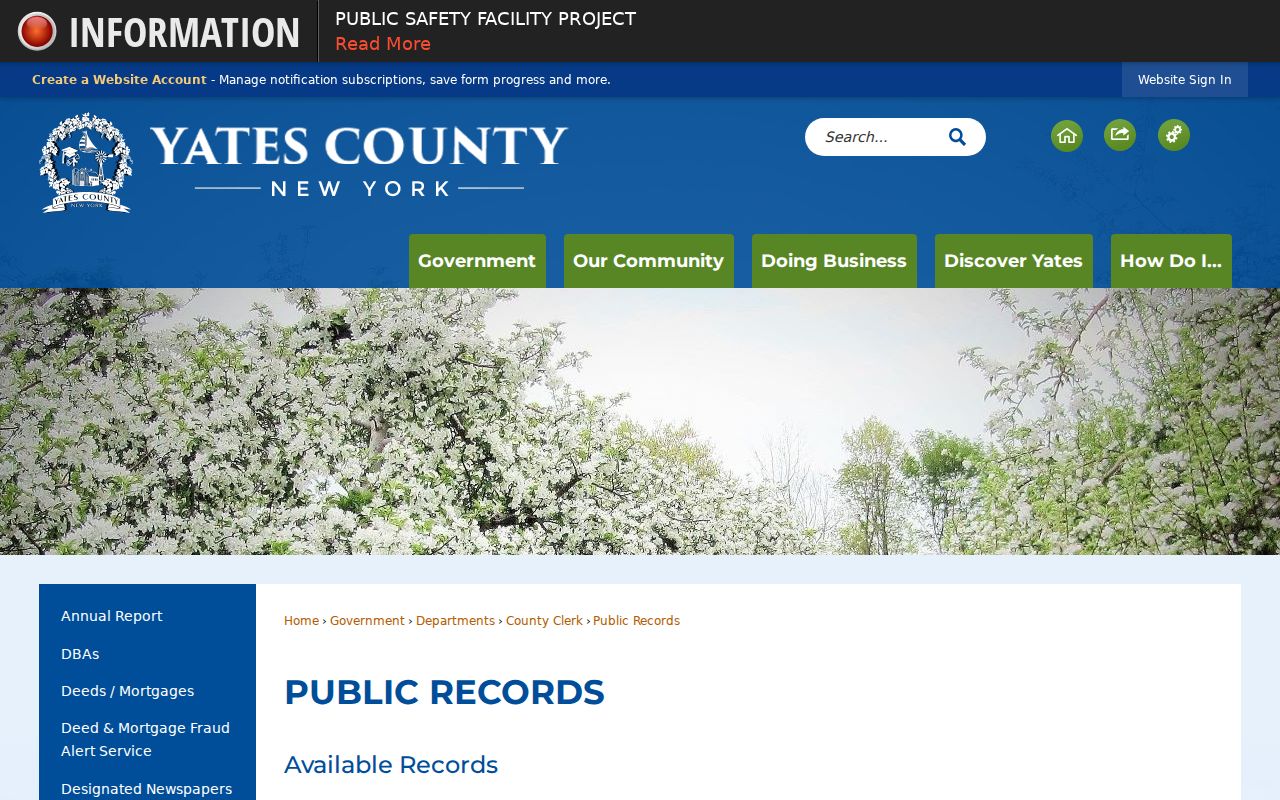
That notice supplies the key dates for tracing prior owners. The County Historian newspaper index offers older name and estate clues.
The image shows an archive route that can bridge gaps before returning to deeds.
Yates County Chain Notes
Log one row per transfer: the date, grantor, grantee, deed type, book and page, and parcel description. That short record keeps a namesake or a neighboring tract out of your Yates County ownership chain.